Start with one clear job
Define the situation in which customers will use the product and the practical problem it should solve.

A practical starting guide for new food brands
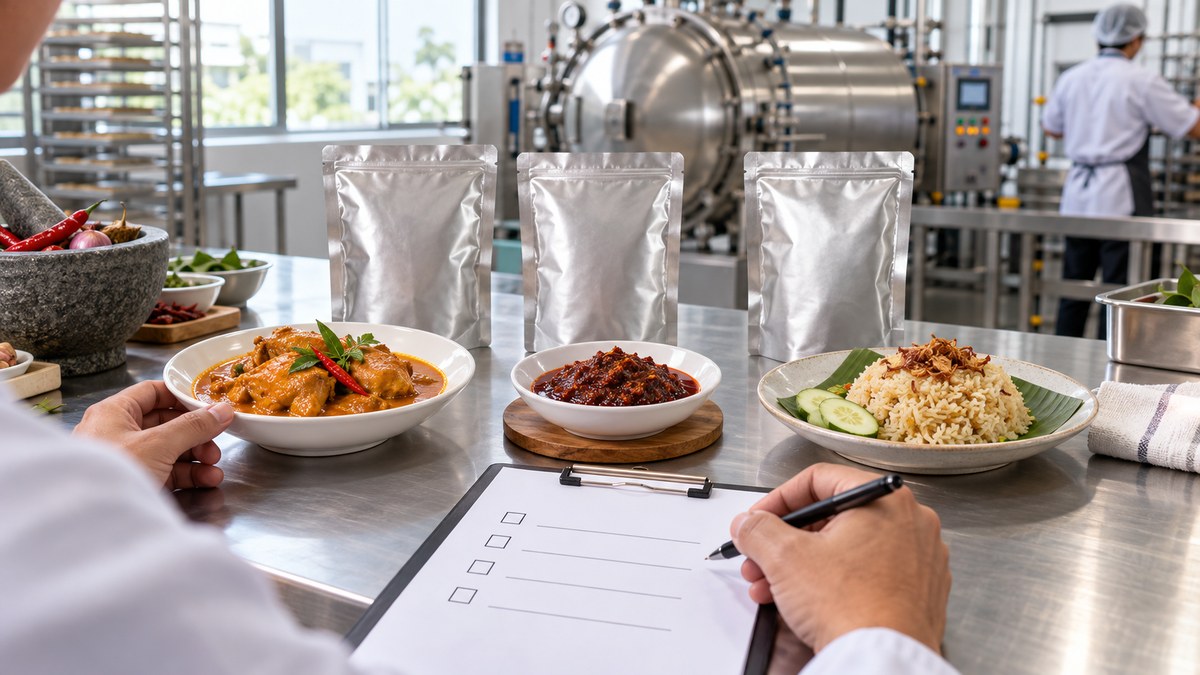
Your first product can shape how customers understand your food brand. A concept that is too complicated may require more development decisions, while a product that is too broad can be difficult to position. The right first retort food product should balance customer demand, recipe strength, production suitability, packaging and commercial potential.
You do not need to launch a complete range at once. One product with a clear use case and a consistent specification is enough to test your market, collect feedback and build a foundation for future products.
Define the situation in which customers will use the product and the practical problem it should solve.
Use one lead product to learn about demand, pricing, packaging and repeat purchase before adding more flavours or formats.
Ask why customers need the product. They may want a meal that is quick to prepare, a convenient side dish, a cooking paste that saves time or food that is easier to store and transport. A specific problem gives your product a clearer role.
Avoid defining the market as “everyone”. Identify the primary customer, the occasion and the result they expect. A single-serving meal for busy professionals will require different decisions from a family cooking paste or an institutional food product.
Development is easier when the founder understands the flavour, ingredients and customer expectations in the category. Consider recipes that already receive good feedback, dishes customers frequently request or products connected to your existing business experience.
Anggun Agro supports categories such as rice, complete meals, cooking pastes, sambal, egg products and other concepts that may be assessed for retort processing. Review the available categories on the OEM Retort page before preparing your brief.
A kitchen recipe is the starting point, but the result may change when batch size, cooking conditions and thermal processing change. Sauce thickness, ingredient texture, colour and flavour balance may need adjustment during development.
Document the ingredients, quantities, cooking sequence and sensory qualities you want to maintain. The technical team can then evaluate the formula, serving size, packaging and process together. Avoid setting a shelf-life claim or making performance promises before the actual product has completed the appropriate evaluation and validation.
| Criterion | Question to answer | Strong starting signal |
|---|---|---|
| Customer need | When and why will customers use it? | A clear occasion and target user |
| Recipe confidence | Which qualities must be maintained? | Documented ingredients and sensory targets |
| Commercial fit | Can the target price support the full cost? | A realistic price, channel and margin range |
Customers should understand the product quickly. Its category, main flavour, use and practical value should be obvious. “A family curry paste for a quick home-cooked meal” is easier to understand than a concept that tries to combine too many flavours and purposes.
Write one sentence describing who the product is for, when it is used and what makes it relevant. This statement helps the R&D, packaging and sales teams work towards the same product position.
Serving size affects price, convenience, pouch dimensions, shipping weight and shelf presentation. A single meal should be practical for one person, while a family format needs a different portion and preparation instruction.
Consider whether the product will be sold individually, in a mixed bundle or as part of a subscription. For e-commerce, account for carton size, weight and protection during delivery. Anggun Agro’s Packaging service includes product filling, retort pouch handling, sealing, label support, batch coding and carton packing.
A strong first product should give customers a reason to buy again. Consistent taste, a clear purpose, suitable portion size and convenient preparation can help the product become part of a routine.
Test the idea using specific questions. Ask potential customers when they would use it, which flavour they prefer, what portion they expect and what price range feels reasonable. A general “Do you like this idea?” question provides less useful evidence about purchase intent.
Product cost includes more than ingredients. Allow for sample development, production, pouches, labels, cartons, design, documentation, storage, delivery and launch activities. Discuss the intended selling price and margin early so the concept can be adjusted before too much time is invested.
Do not base the price only on a competing product. Two products that look similar may use different portions, ingredients, processes and packaging. Use your initial estimate as a decision boundary, then refine it using the specifications of your own product.
Launching several flavours at the same time increases the number of samples, labels, packaging materials and inventory decisions. One lead product lets you focus on the formula, market message and customer feedback.
Your first retort food product does not need to serve every market. It needs one clear promise, a defined use case and a specification that can be produced consistently. Sales data and customer feedback can then guide the next flavour, size or product category.
Prepare your recipe, target customer, serving size, packaging preference and sales channel. A concise brief will help make the first consultation more productive.