Technical fit
The manufacturer should be able to evaluate your recipe, product format, portion size, packaging and intended production flow as one connected system.

A practical evaluation guide for food entrepreneurs
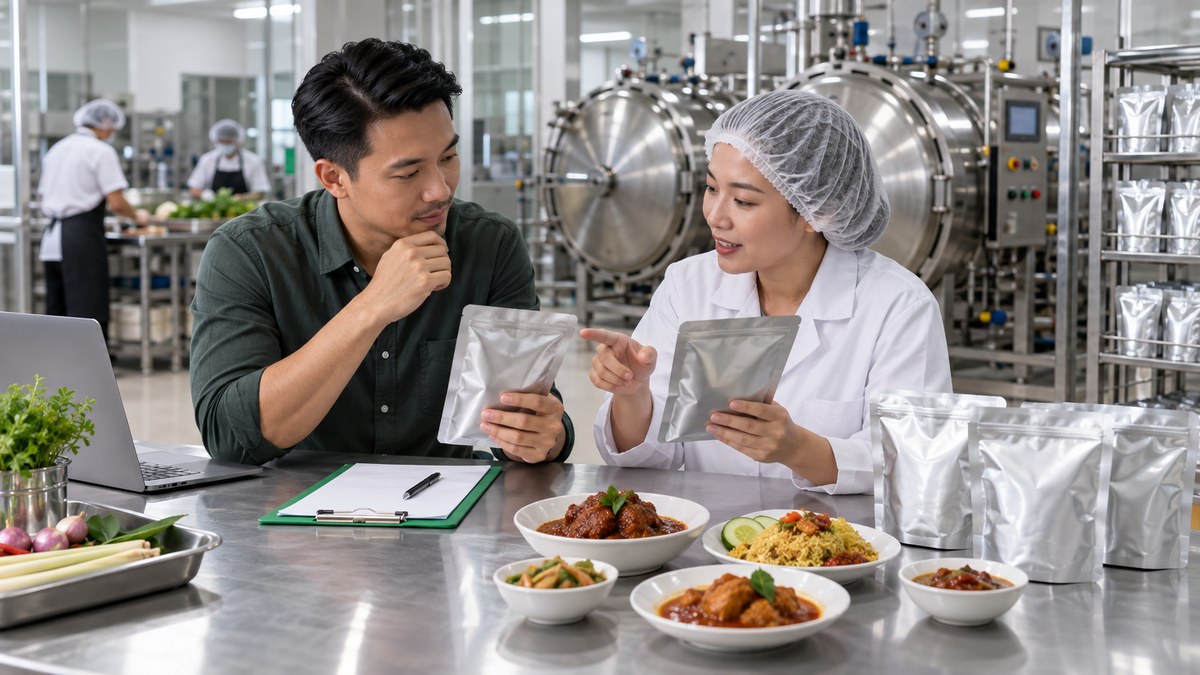
Choosing a retort manufacturing partner is one of the most important decisions behind a ready-to-eat or ready-to-cook food brand. The right partner should do more than operate a retort machine. They should help you connect product development, processing, packaging and commercial production in a controlled and repeatable workflow.
A clear evaluation process helps you compare manufacturers using the same criteria. It also reduces the risk of making a decision based only on the lowest quotation or the fastest promised timeline. Use the following areas to prepare your questions and assess whether a manufacturer is suitable for your product.
The manufacturer should be able to evaluate your recipe, product format, portion size, packaging and intended production flow as one connected system.
Clear communication, documented feedback and realistic expectations are essential because product development usually involves several decisions and sample reviews.
A kitchen recipe cannot simply be multiplied for commercial production. Ingredient behaviour, cooking time, mixing, filling and thermal processing can affect taste, texture and appearance. Ask how the manufacturer turns an early concept into a documented formula and production-ready specification.
A capable team should explain how samples are developed, how feedback is recorded and what information you need to provide. Anggun Agro’s Research & Development service combines technical, processing and culinary input to support the journey from recipe to commercial product.
Different foods present different development challenges. Rice, meals with solid pieces, sauces, cooking pastes and egg products vary in composition, filling method and packaging needs. A useful discussion should cover the actual product you want to produce instead of relying on a general statement that every food can follow the same process.
Prepare a short product brief that includes the recipe, serving size, target customer, intended use and preferred packaging. This gives the manufacturer enough context to identify questions that need to be resolved before sampling.
| Area | Question to ask | What a useful answer should clarify |
|---|---|---|
| R&D | How are samples developed and approved? | Feedback stages, responsibilities and final specification |
| Production | How is consistency managed between batches? | Process controls, records and quality checks |
| Packaging | Which formats can be evaluated for this product? | Filling, sealing, coding, labelling and carton options |
Ask the manufacturer to describe the steps from ingredient preparation to finished goods. Depending on the product, the workflow may involve preparation, cooking or steaming, mixing or tumbling, filling, vacuum sealing, retort processing, inspection and packing.
The purpose of this discussion is to understand how your product will move through the facility and where decisions or approvals are required. Anggun Agro describes its integrated process and supported product categories on the OEM Retort page.
Packaging decisions affect production, storage, shipping and the customer experience. Confirm whether the team can support product filling, retort-compatible pouch handling, sealing, label printing and application, batch coding, shrink wrapping and carton packing.
It is helpful when packaging can be discussed alongside the recipe and serving size. This reduces the chance of completing the artwork before the product weight, pouch dimensions or label area has been confirmed. Review the available services on Anggun Agro’s Packaging page.
A professional manufacturer should be able to explain how specifications, production records, batch identification and inspections are handled. Your questions should focus on the controls relevant to your product and the documents that will be agreed before production.
Avoid relying on broad promises about shelf life, safety or product performance. These decisions should follow the appropriate technical evaluation, validation and documentation for the actual formulation and packaging format.
A lower initial quotation may not include the same development, packaging or support scope. Compare what is included, which decisions remain your responsibility and how changes may affect cost or timing. A transparent scope makes it easier to evaluate proposals fairly.
Your manufacturing partner should help you build a product that can be specified, produced and improved over time. Look for a team that asks practical questions, explains trade-offs and keeps the development process connected to your customer and business model.
Prepare your recipe, target serving size, customer profile, packaging preference and sales channel. A concise brief will make the first consultation more productive.