
Retort Malaysia: How to Prepare Your Food Product for OEM Manufacturing
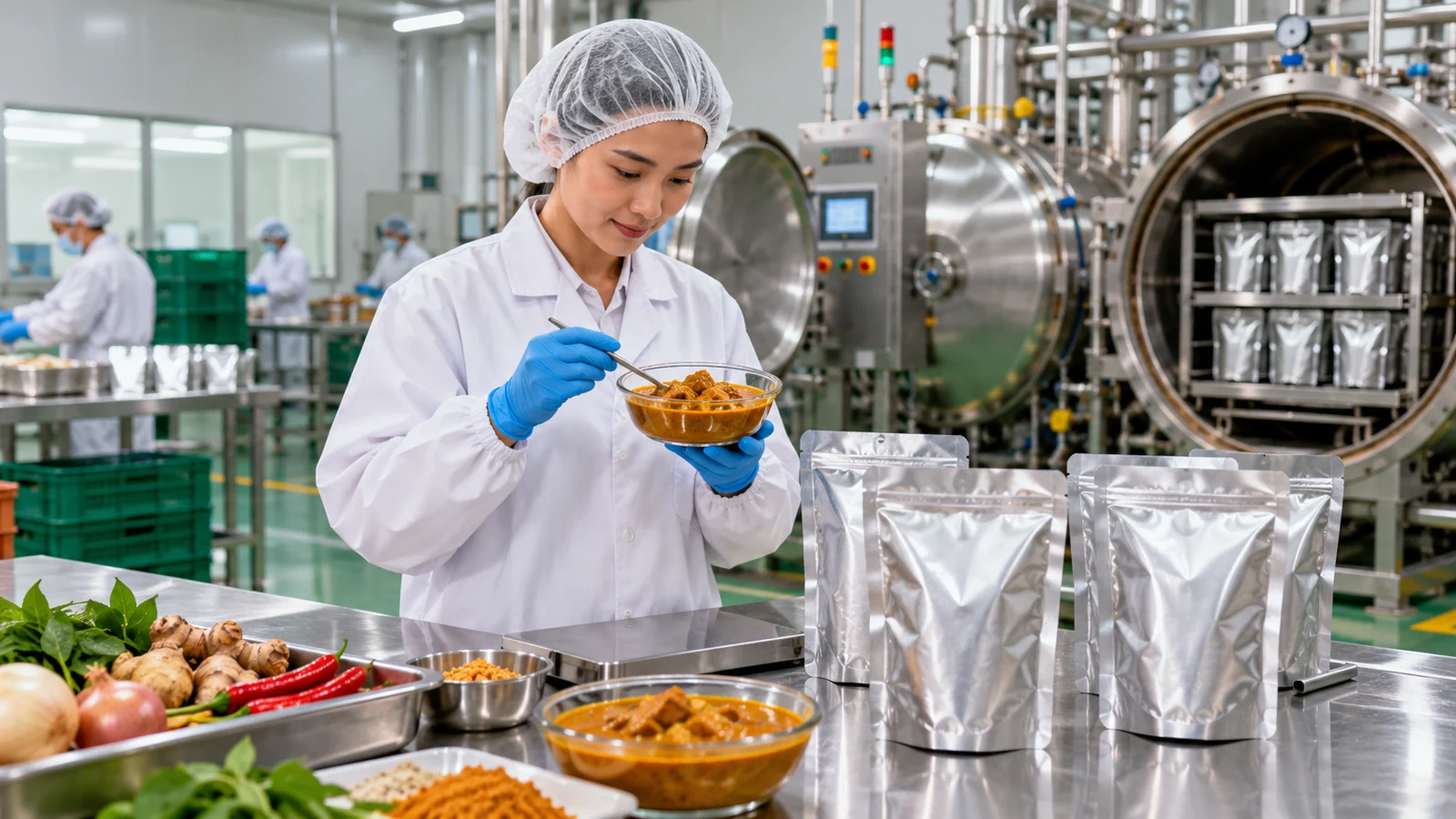
A practical product brief for your first OEM discussion
If you are researching Retort Malaysia for your food brand, a clear product brief can make the first manufacturing discussion more useful. Instead of arriving with only a dish name, explain who will buy it, how they will use it and which qualities your recipe must retain.
This guide focuses on the information you can prepare before an OEM consultation. You do not need every answer in advance: identifying what is confirmed and what still needs development is part of a useful brief.
Bring a clear starting point
A written recipe, serving idea and customer profile give the team something specific to discuss.
Keep room for development
Treat packaging, production volumes and launch timing as decisions to confirm after assessment.
1. Describe the customer and serving occasion
Start with one sentence: “This product is for [customer], who needs [meal solution] when [occasion].” A family sharing a cooking paste has different needs from a traveller buying a single meal. Describe whether the customer will eat the product directly, reheat it or combine it with other ingredients.
Include your intended sales channel, such as online retail, shops or foodservice. This helps frame questions about portion size, presentation, carton quantities and delivery arrangements. Label assumptions clearly instead of presenting an early sales forecast as a confirmed order.
2. Turn your recipe into a repeatable record
Write down ingredient names, quantities, preparation steps and the finished batch yield. Record ingredient brands or specifications where they affect flavour and consistency. Note which features define the product: the balance of spice, sauce consistency, ingredient size or serving experience.
Ask the manufacturer how to provide samples and recipe information before sending them. Agree how confidential information will be handled. A home or restaurant recipe is a starting point for discussion; it is not automatically a finished manufacturing specification.
Anggun Agro’s Research & Development service brings together formulation, processing and culinary expertise. Use the consultation to identify which parts of the recipe need further assessment.
3. Explain your portion and packaging preferences
Describe the serving size you have in mind and whether the pack should serve one person or several. Explain practical preferences such as ease of opening, shelf presentation and how customers should use the contents. If you already have packaging artwork, mark it as a draft until the pack and product details are confirmed.
Discuss pack suitability with the team before committing to printed packaging. Anggun Agro’s packaging services include pouch packaging, filling, coding and label-related services. Confirm which services are included in your particular project.
4. Separate commercial targets from confirmed specifications
Provide an indicative launch quantity, expected reorder pattern and target selling price. Explain which costs your budget must cover, including development, packaging, manufacturing and delivery. Ask for a written scope so that you can compare quotations on the same basis.
Minimum order quantities, prices and lead times should be confirmed directly for the product. Avoid setting a firm launch date until the required development stages and production arrangements have been agreed.
Your Retort Malaysia consultation checklist
| Brief item | What to prepare |
|---|---|
| Customer | Target buyer, serving occasion and sales channel. |
| Recipe | Ingredient quantities, preparation method, yield and sensory priorities. |
| Packaging | Preferred portion, pack format and artwork status. |
| Commercial plan | Indicative volume, budget scope and desired launch window. |
| Open questions | Unconfirmed requirements and decisions that need technical input. |
5. Agree how samples and decisions will be recorded
Use a simple sample review sheet with a sample code, date and comments on taste, texture, portion and presentation. Separate essential changes from preferences. Nominate one person to consolidate feedback so the team receives a clear decision rather than conflicting requests.
At the end of each discussion, record the next action, the person responsible and what remains unconfirmed. Ask which technical assessments, checks and product documentation are required before production. Shelf-life targets and product claims should be discussed with the team and supported by appropriate evidence before use.
A simple example brief
Illustrative concept: A single-serving curry intended for working adults buying through an online shop.
Available: A written recipe and a description of the preferred flavour and texture.
To confirm: Product suitability, portion, packaging, development scope, production quantity and timeline.
This is an example of how to organise information, not an approved product or manufacturing specification.
Frequently asked questions
Can I approach an OEM team with only an idea?
Yes, you can begin with a concept. Explain what you have already developed and ask what information the team needs for an initial assessment. A complete written brief can be developed as questions are resolved.
Should I finalise the packaging before the recipe?
Discuss both together. Keep artwork and pack preferences provisional until the product and packaging requirements have been reviewed. This reduces the chance of paying for packaging that later needs to change.
What should I ask about the quotation?
Ask which development, packaging and production items are included, which costs are separate and what assumptions the quotation uses. Confirm quantities and lead times directly rather than relying on a general online estimate.
Make your first OEM discussion more productive
A useful Retort Malaysia project brief gives the team a shared starting point and makes unanswered questions visible. Review Anggun Agro’s OEM Retort service, then bring your recipe status, customer profile and packaging preferences to the discussion.
Ready to discuss your product brief?
Share your food concept and the questions you need help resolving with Anggun Agro.